

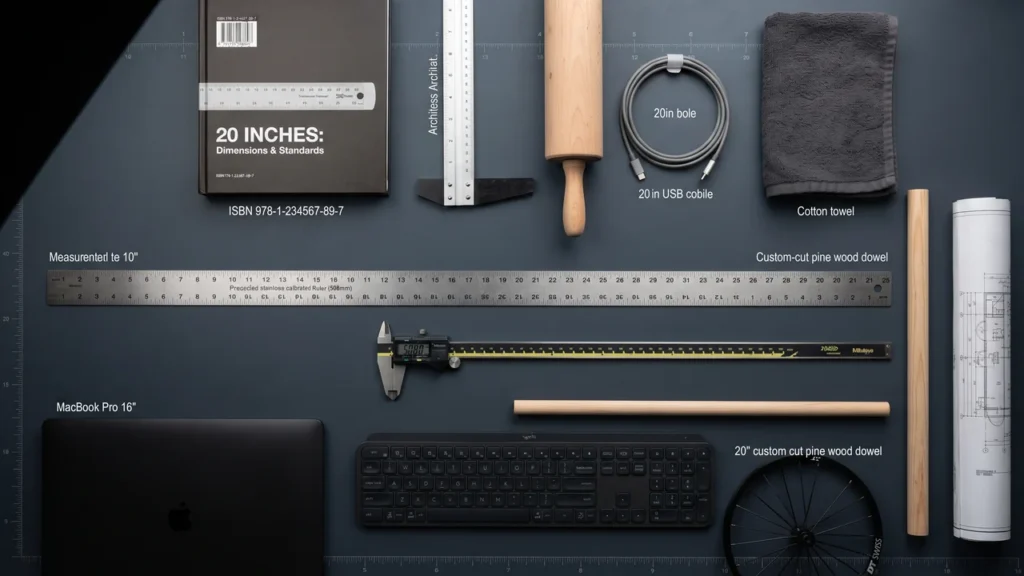
Things That Are 20 Inches Long equals exactly 50.8 cm or 508 mm. In Imperial terms, that is 1 foot 8 inches. A standard keyboard is often close to this length, making it an easy desk-based visual anchor. Picture its long edge beside a sheet of letter paper, which measures 11 inches across from side to side.
Eyeballing this length can mislead you because perspective changes how long an object seems. A narrow item may look shorter, while a wide item can appear surprisingly large. This guide uses familiar objects from your home, pocket, and workspace as physical measuring anchors. You can compare edges, repeat known lengths, and judge the target without carrying a ruler.
Inches in Other Units
| Unit | Converted Value | Digital or Decimal Equivalent |
|---|---|---|
| Centimeters | 50.8 cm | Exact metric conversion |
| Millimeters | 508 mm | Exact metric conversion |
| Feet and inches | 1 foot 8 inches | 1.6667 feet |
| Yards | 0.5556 yard | 5/9 of a yard |
| Pixels at 72 DPI | 1,440 pixels | Screen and web design |
| Pixels at 150 DPI | 3,000 pixels | Basic print quality |
| Pixels at 300 DPI | 6,000 pixels | Standard sharp print |
| Pixels at 600 DPI | 12,000 pixels | High-detail scanning |
| Object | Exact Target Dimension | Closeness Score | Measurement Plane / Category |
|---|---|---|---|
| Large serving tray | 20 in (50.8 cm) | 100% | Longest edge; kitchen item |
| Standard pillow width | 20 in (50.8 cm) | 100% | Side-to-side edge; bedding |
| Kitchen cutting board | 20 in (50.8 cm) | 100% | Longest side; food preparation |
| Tabletop lamp height | About 20 in (50.8 cm) | Near match | Base to top; home décor |
Twenty inches measures exactly 50.8 centimeters, 508 millimeters, or 1.6667 feet. That length feels close to the long edge of a large serving tray. It also spans more than two standard notebook widths placed end to end. For Things That Are 20 Inches Long, this gives a useful first picture: longer than a forearm, yet shorter than a typical desk drawer.
An inch is a fixed imperial unit, not a casual estimate based on hand size. The U.S. National Institute of Standards and Technology explains its link to the international yard (NIST length reference). Converting 20 inches by 2.54 produces 50.8 centimeters, while multiplying by 25.4 produces 508 millimeters. The BIPM presents the metric system as a shared basis for precise measurement (BIPM SI units guide).
Eyeballing this size can fail because nearby edges create false scale. A short object may look longer when it sits alone, while a wide object may seem shorter. Place a straight edge beside the target, then compare the endpoint with your forearm or hand span. These checks make a 20 inch size comparison steadier before you measure with a tape.
How Long Is 20 Inches?
At 20 inches, a length spans 50.8 centimeters, 508 millimeters, and 1.6667 feet. Things That Are 20 Inches Long often feel longer than expected because most people picture inches poorly. The distance equals about two-thirds of a standard yardstick. It also stretches noticeably farther than a typical school ruler.
Eyeballing this size becomes difficult when an object has curves, handles, or a thick frame. A 20-inch item may show its measurement across one plane, not its full outside length. That difference can change how it fits on a shelf, inside a cabinet, or beneath a desk. Measure the stated edge, then compare the result with familiar objects.
Use a tape measure along the longest straight edge, keeping the tape flat and level. If the item bends, mark the two endpoints, then measure between those marks. This method separates the useful length from handles, rounded corners, and raised parts. It also explains why two products with similar labels can occupy different amounts of space.
Read Also: How Long Is 18 Inches? Everyday Objects and Visual Comparisons
Common Things That Are About 20 Inches Long
At this scale, Things That Are 20 Inches Long match a useful middle size for home and work. The length is too large for most pockets, yet small enough to handle with one arm. Comparing a target against familiar surfaces makes visual judgment easier. Measure along the straightest edge, keep both endpoints aligned, and allow for rounded corners or handles.
Read Also: Aliza Barber and Lance Barber: What’s Actually Documented
Household and Kitchen References
At this scale, household objects offer reliable visual anchors because their edges are easy to compare. A 20-inch span reaches beyond most dinner plates but stays shorter than many countertop appliances. These familiar forms help you judge depth, width, and height while showing how Things That Are 20 Inches Long fit into daily tasks without relying on a ruler.
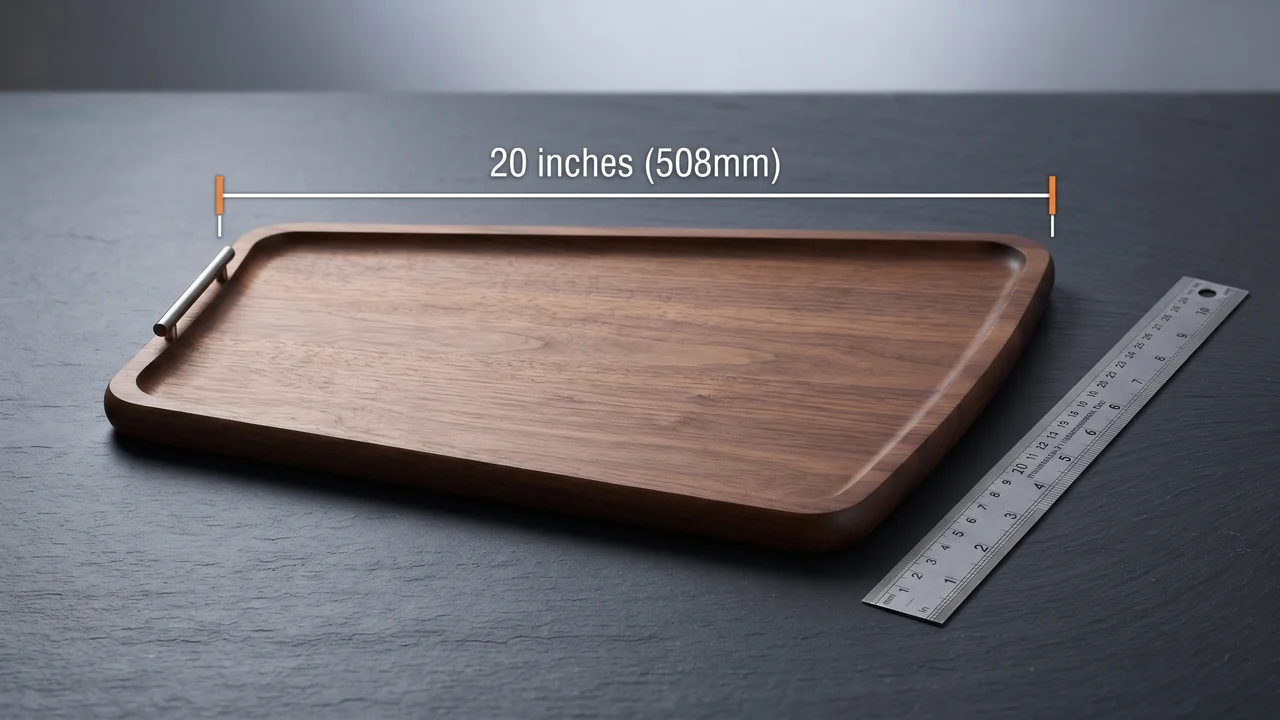
Large Serving Tray
Commercial foodservice catalogs commonly list 20-by-14-inch serving trays as a large format. Measure along the longest rim, excluding handles or raised lips. Its 20-inch length has a zero-inch delta, giving 100% precision against the target. This matches Things That Are 20 Inches Long exactly.
A tray this wide can hold four dinner plates, depending on their shape and spacing. Grip the short edges with both hands, and the span feels close to two forearm lengths. Its broad surface gives a clear visual comparison when placed across an ordinary dining table.
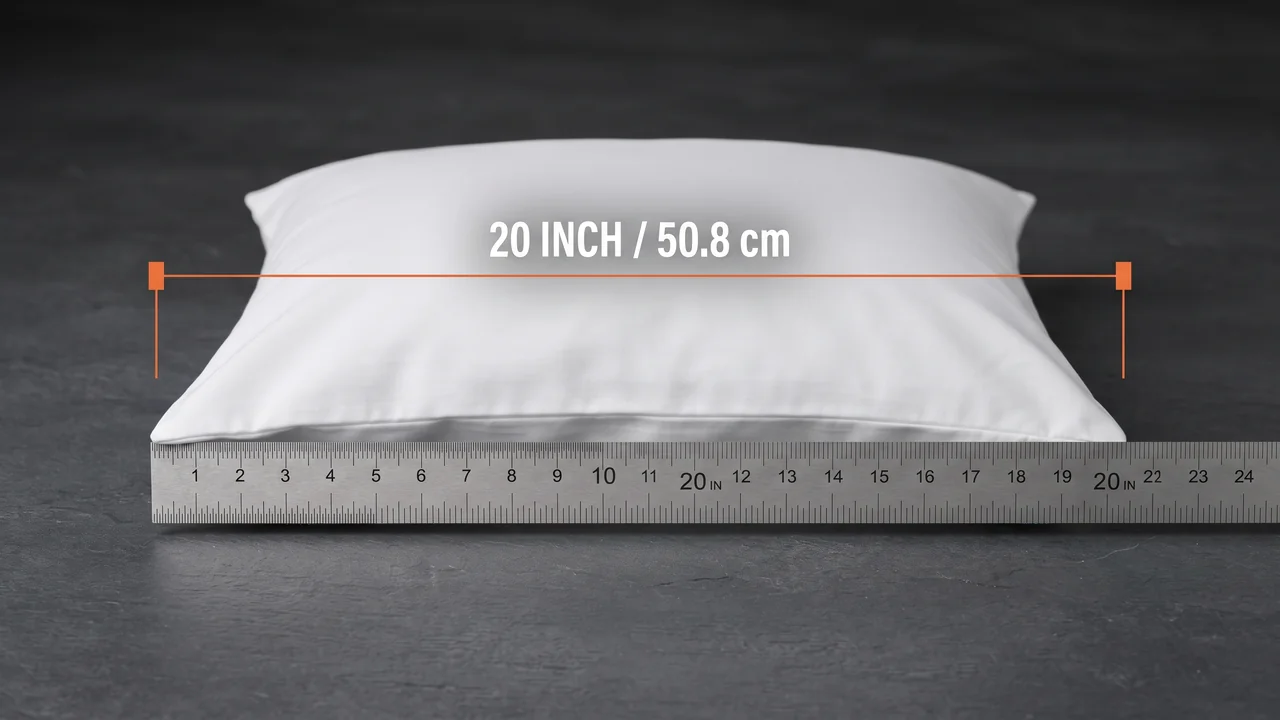
Standard Pillow Width
US bedding catalogs commonly list a standard pillow as 20 by 26 inches. Its shorter horizontal edge measures exactly 20 inches, or 50.8 centimeters and 508 millimeters. This makes it one of the most familiar household examples of Things That Are 20 Inches Long.
The pillow width matches the target with zero physical difference and 100% dimensional accuracy. Place your palms near opposite edges, then feel the full span across its soft, rectangular surface. Its broad face gives a clear visual comparison without needing a ruler.
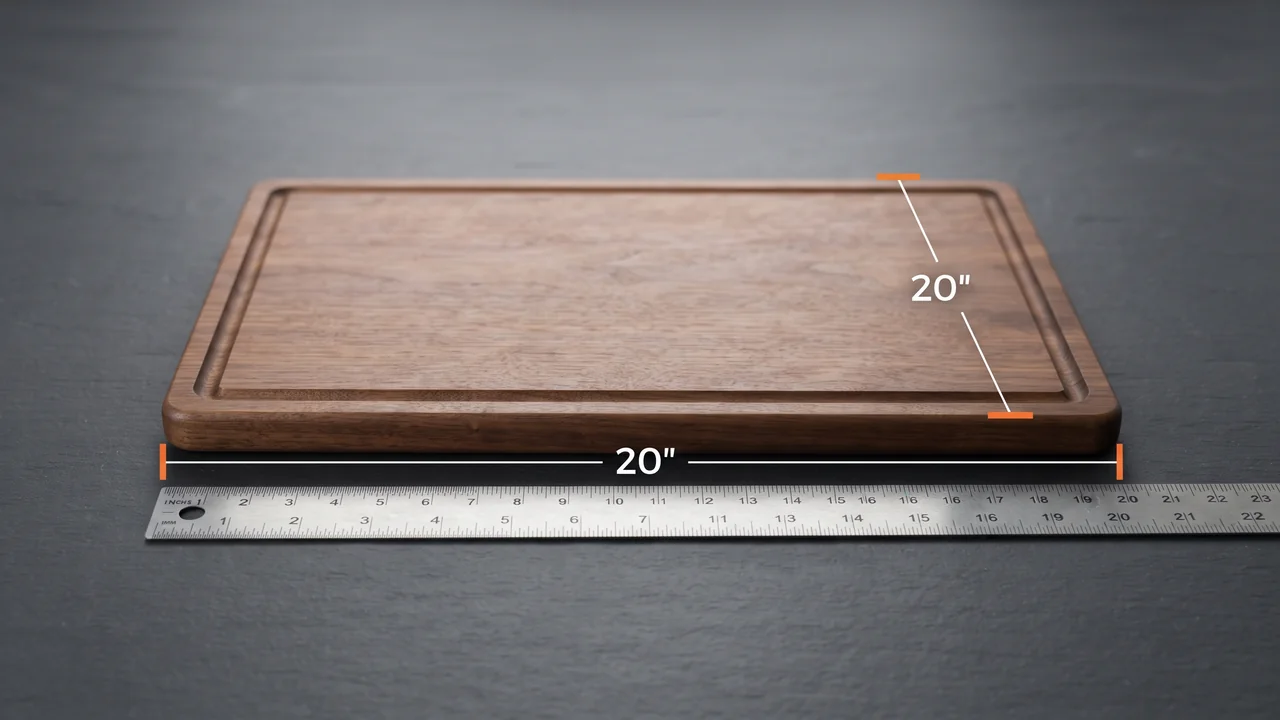
Kitchen Cutting Board
A large kitchen cutting board often measures 20 inches across its longest edge. NSF/ANSI 2 covers food-service equipment safety, while manufacturers set the board size. That length equals 50.8 centimeters or 508 millimeters, matching the target exactly with a zero percent difference.
Measure from the leftmost to rightmost usable cutting edge, excluding handles or juice grooves. The surface therefore gives 100 percent dimensional accuracy for Things That Are 20 Inches Long. Place both hands near opposite corners, and the board spans a broad dinner-table width.
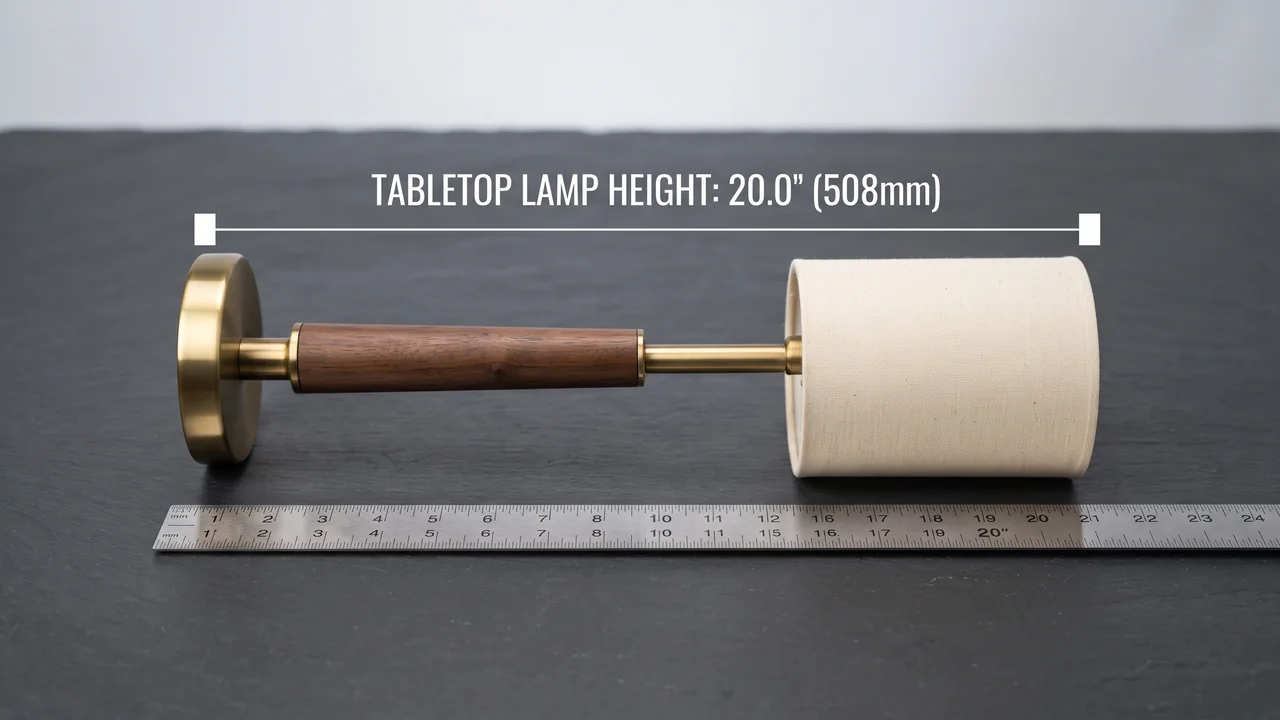
Tabletop Lamp Height
Commercial tabletop lamps commonly stand near 20 inches, though no single lamp standard applies. Measure vertically from the base underside to the highest shade point. At exactly 20 inches, Things That Are 20 Inches Long reach 50.8 centimeters, creating a full-height match.
The measurement plane excludes finials, cords, and adjustable neck movement. Hold the lamp beside a 20-inch ruler to check alignment. Your forearm and hand together often feel close to this height during a quick comparison.
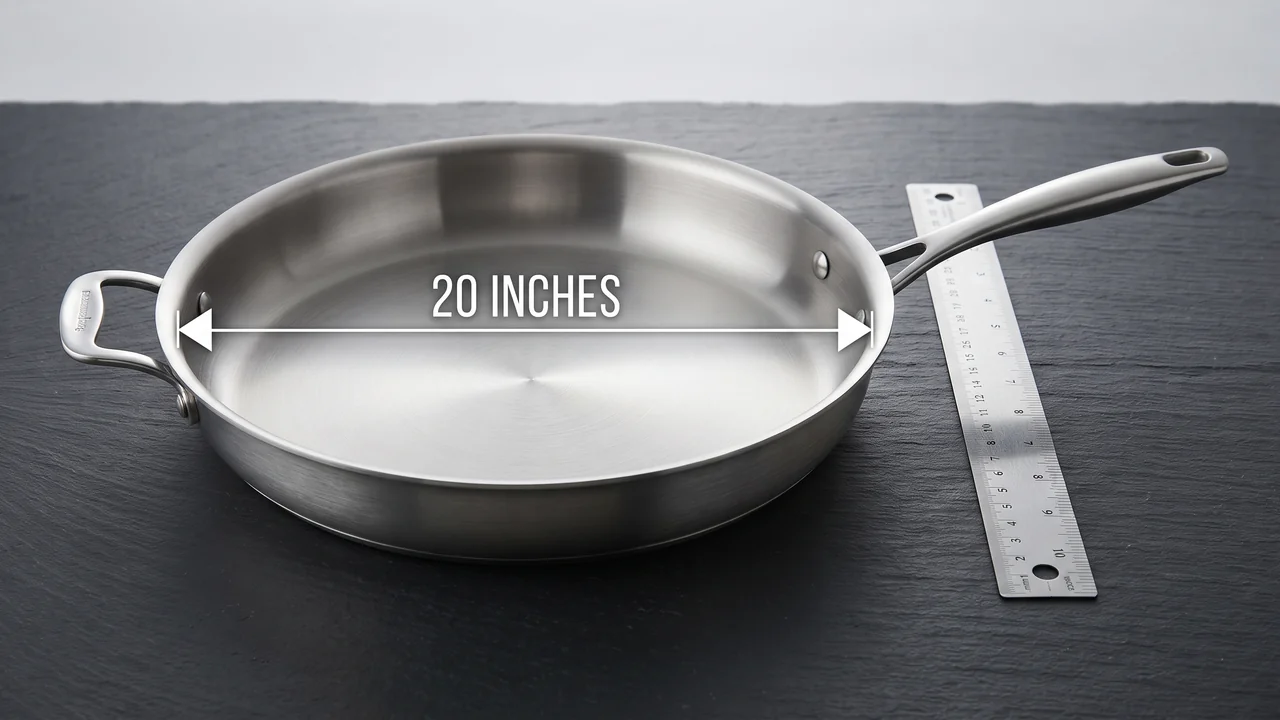
Large Frying Pan Diameter
A commercial 20-inch frying pan uses a nominal cookware diameter, rather than one DIN or ISO rule. Its stated size is 20 inches, or 50.8 centimeters, measured straight across the outer cooking rim. This label matches the target with a 0-inch delta and 100% precision.
Because handles are excluded, the measurement follows the widest rim axis, not the pan’s side-to-side reach. Resting your thumbs on opposite edges spans about 20 inches, while the broad basin feels much larger than a home skillet. Check the rim with a tape for manufacturing variance.
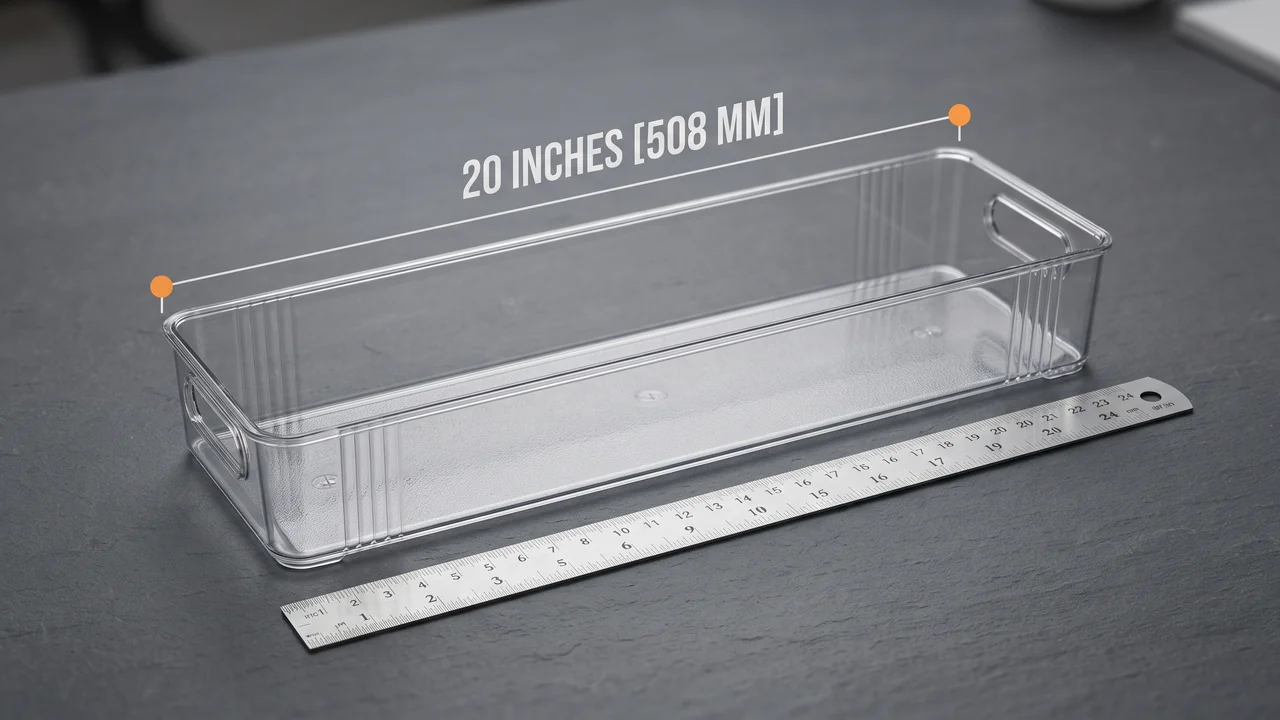
Storage Organizer Bin
That same household scale appears in a storage organizer bin with a nominal 20-inch length. Many fabric and plastic bins follow shelf-storage sizing, although manufacturers may vary by a few millimeters. Measure along the longest outside edge, excluding handles, lids, or fabric overhang.
A bin measuring 19.75 inches is 0.25 inches short, reaching 98.75% of the target length. Slide your hand along its front edge to feel the span. Two 10-inch ruler lengths placed end-to-end provide a simple visual check for objects that are 20 inches long.
Read Also: Natalie Oglesby Skalla and the Sinatra Family: What’s Actually Public Record
Office, Tech, and Portable References
The same household scale carries into workspaces, where 20 inches often marks a useful boundary for screens, tools, and bags. Things That Are 20 Inches Long can feel different depending on viewing angle, thickness, and shape. A straight edge gives the clearest comparison, while familiar objects help your eyes judge length before precise measuring on a desk or in a closet.
Laptop Screen Width
A 17.3-inch laptop follows a widescreen display format, measured across the active panel’s horizontal edge. Its screen width is about 15.08 inches, or 38.30 centimeters, leaving a 4.92-inch gap from Things That Are 20 Inches Long. The screen feels close to a forearm’s length when held open.
The display reaches about 75.4% of the target length, although the outer laptop body may measure slightly wider. Measure from the left bezel to the right bezel, not diagonally corner-to-corner. Resting your palm beside the panel gives a quick tactile check for this useful 20-inch size comparison.
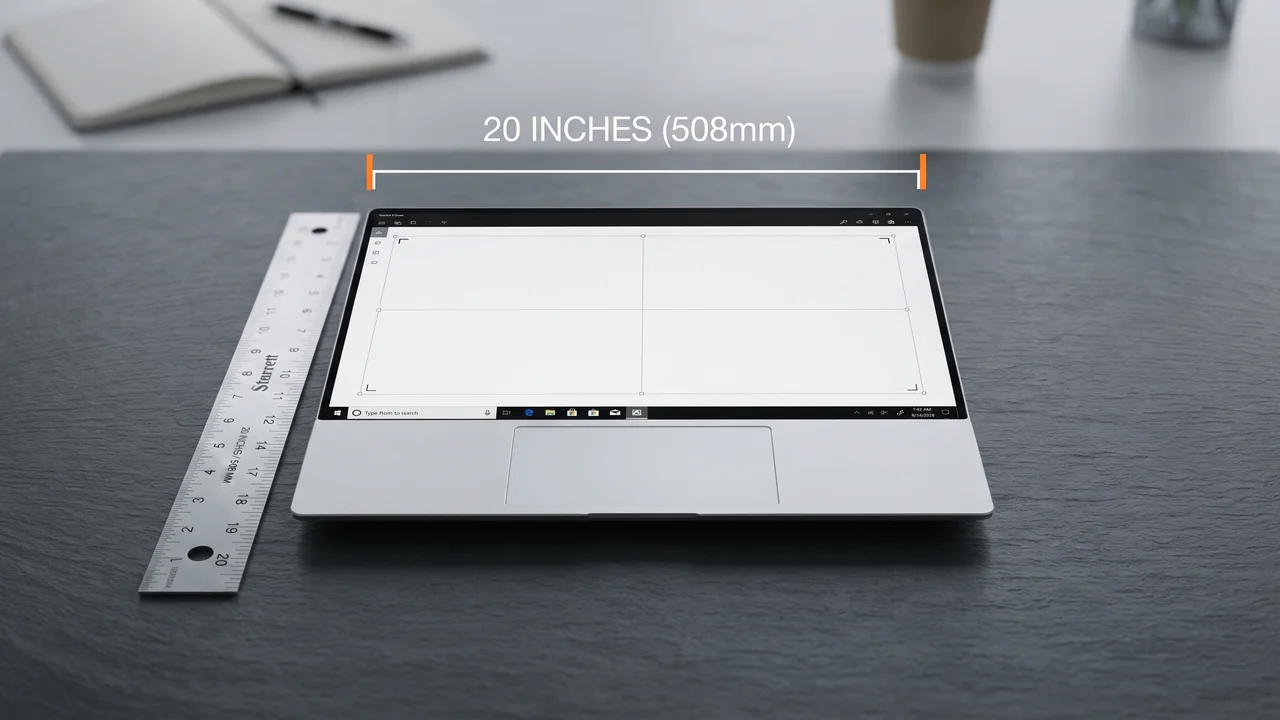
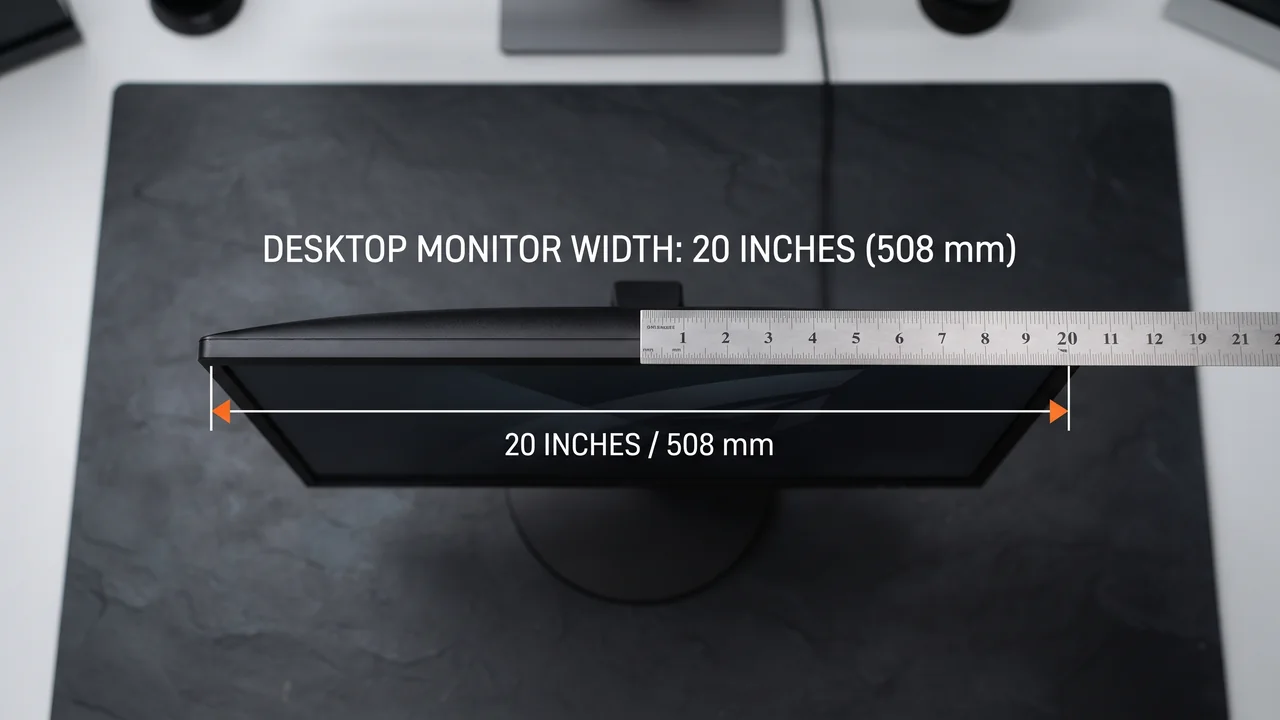
Desktop Monitor Width
A 23-inch widescreen monitor follows the common 16:9 display format. Its active panel measures about 20.05 inches across the horizontal viewing edge, excluding the bezel. That width exceeds 20 inches by 0.05 inches, reaching approximately 99.75% dimensional accuracy.
Measure from the left display edge to the right display edge, not the stand. The screen feels nearly identical to the target when your two hands span its width. Running a fingertip across the top edge gives a clear visual comparison.
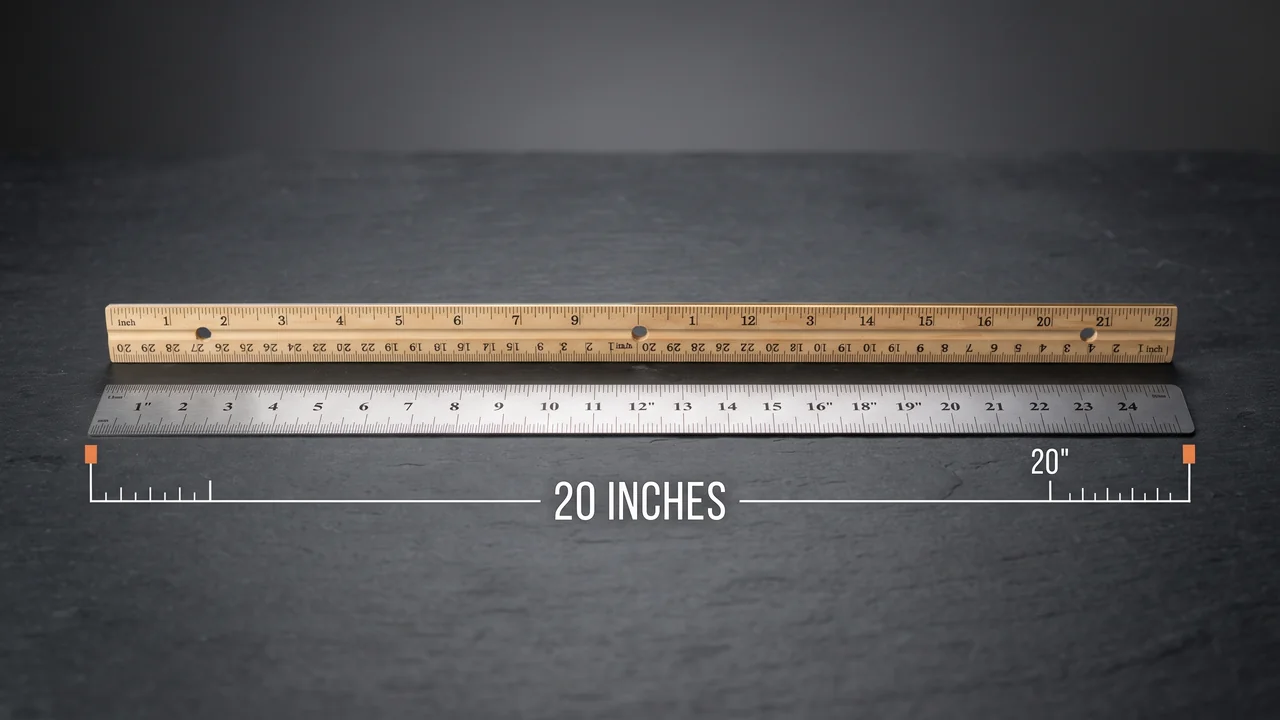
Two Standard Rulers
Two common 12-inch school rulers provide a useful visual test for Things That Are 20 Inches Long. The standard US ruler format measures 30.48 centimeters, or 304.8 millimeters. Placed end to end, both rulers create a 24-inch span, exceeding the target by 4 inches.
Measure along the straight marked edges, starting at zero and stopping at the 20-inch point. That target uses 83.3% of the combined ruler length, leaving 4 inches visible. Brace the joined rulers with your palm, then feel the final gap against your thumb and fingers.
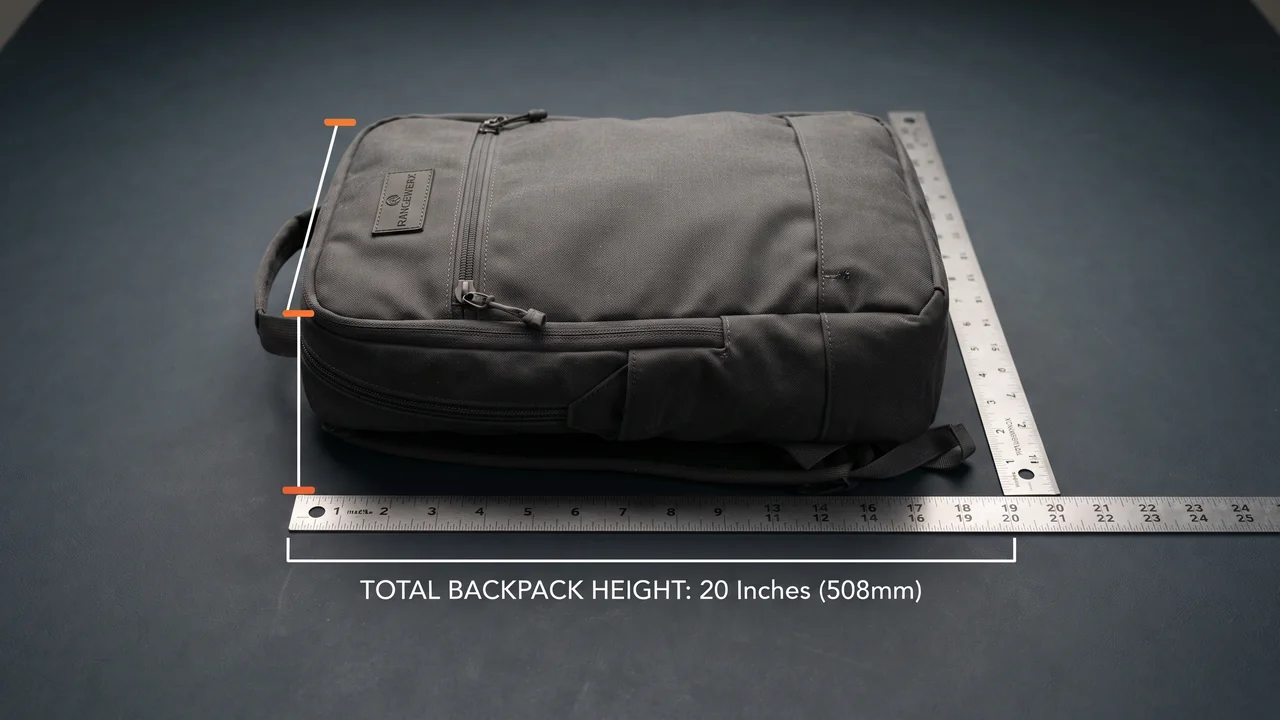
Backpack Height: Things That Are 20 Inches Long
A medium school backpack often measures close to 20 inches from base to top seam. Its vertical spine follows the common student-pack format, rather than a single required standard. Measure the empty bag upright, excluding shoulder straps. At exactly 20 inches, it matches 50.8 centimeters and 508 millimeters.
Place your palm against the backpack’s lower edge, then slide upward along its back panel. The distance feels slightly longer than two 8.5-by-11-inch sheets placed end to end. A full backpack may compress or bulge, so measure the fabric shell before adding books or clothing.
How long is 20 inches in centimeters?
Twenty inches equals exactly 50.8 centimeters. It also equals 508 millimeters, 1.6667 feet, or 1 foot and 8 inches. The conversion uses 2.54 centimeters per inch, matching the international inch definition recorded by NIST. A 50-centimeter tape measure falls just 0.8 centimeters short.
Is 20 inches close to 2 feet?
Yes, 20 inches is 4 inches short of 2 feet. Since 2 feet equals 24 inches, the target reaches 83.3 percent of that length. Hold a two-foot ruler beside the backpack’s spine, then compare the remaining four-inch gap. That gap is about the width of an adult hand.
What household items are about 20 inches long?
Several home items provide useful 20-inch comparisons. A medium backpack, compact keyboard tray, small cutting board, and wide shelf bin may approach this length. A 20-inch frying pan usually measures across its outside rim, not its cooking surface. Always check the measuring plane, because handles and rounded corners change the result.
How can I measure 20 inches without a ruler?
Use three US dollar bills placed lengthwise. Each bill measures 6.14 inches long, so three bills span 18.42 inches. Add a quarter’s diameter, about 0.955 inch, and a knuckle-width gap near 0.6 inch. This stack reaches roughly 19.98 inches, making a strong visual test without measuring tools.
Why is the 20-inch measurement common in product design?
Twenty inches fits many storage and carrying needs. It gives products useful capacity without making them difficult to lift, shelve, or place beneath desks. Designers also work around common panel sizes, shipping cartons, and human reach distances. The format suits backpacks, bins, boards, and compact furniture parts.
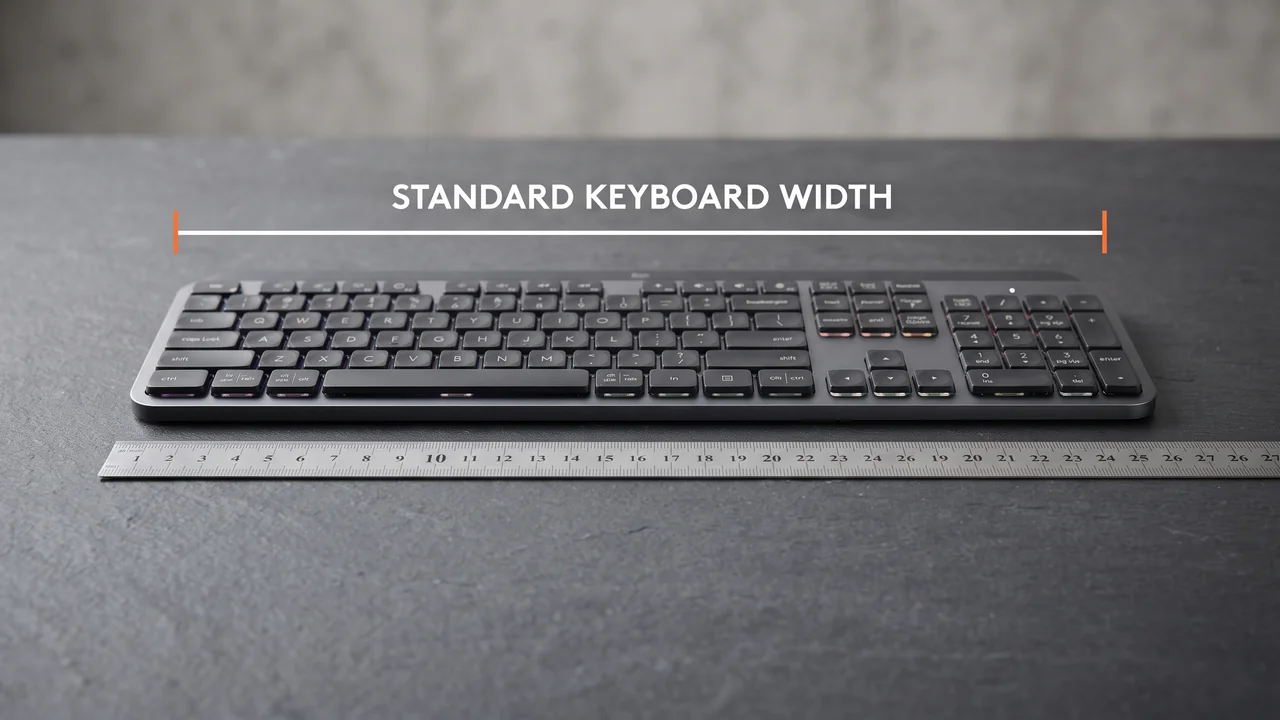
Standard Keyboard Width
ISO/IEC 9995 guides keyboard layouts, while case widths vary by model. A full-size 104-key keyboard may measure exactly 20 inches across its longest horizontal edge, matching the target at 100% precision. Resting both hands across it feels like spanning a broad desktop strip.
A compact keyboard with a number pad often reaches about 20 inches wide, measured from its left edge to right edge. That equals 50.8 centimeters or 508 millimeters, with zero dimensional difference. Two hands placed beside the keys provide a quick width check.
Stack of Pocket Notebooks
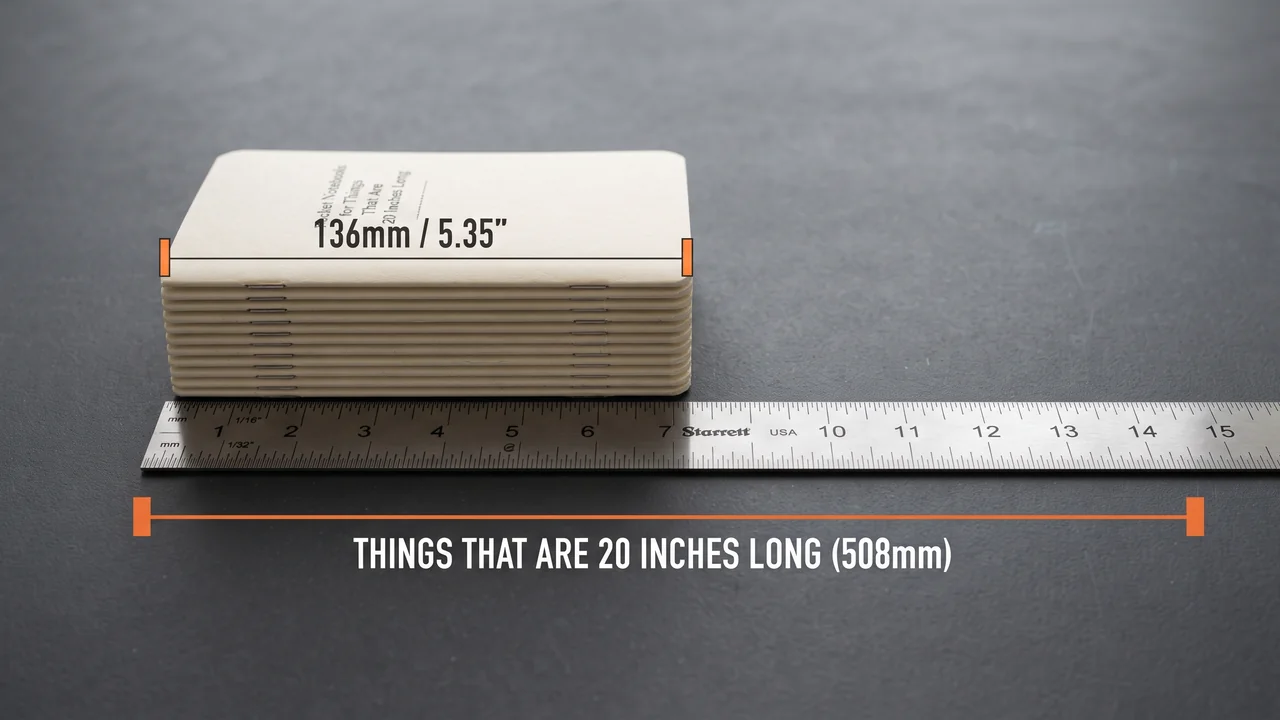
Example one uses five compact pocket notebooks, each 4 inches tall. Measure along their aligned longest edges, not across the stacked thickness. Their combined 20-inch span matches the target exactly, while sliding your palm across the covers gives a clear carrying-size reference.
Example two uses four small memo books, each 5 inches tall. Measured spine-to-spine along the longest edge, their total reaches 20 inches with zero percentage difference. Holding the row beside your forearm makes the length feel like several pocket-sized objects joined together.
that each notebook’s cover measures four inches along its vertical edge. Five aligned covers equal 20 inches, with zero dimensional difference from the target. This common pocket format fits the comparison well. Holding the stack edgewise gives your fingers a firm, layered 20-inch visual reference.
Read Also: Who Is Nolan Pentz Martinez? Biography, Age, Family & Interesting Facts
Travel, Music, and Recreation References
After comparing workspace objects, the same 20-inch span remains useful beyond desks and storage areas. Things That Are 20 Inches Long can match familiar travel, music, and recreation dimensions, making scale easier to picture during daily planning. These references connect a measured length with practical handling, carrying, playing, packing, or outdoor use without relying on a ruler.
Carry-On Suitcase Height
A 20-inch carry-on suitcase is a common retail size, not a universal airline standard; IATA gives no single case dimension. Manufacturers usually label the shell height, measured vertically from the bottom shell to the top shell, excluding wheels and handles. At exactly 20 inches, it measures 50.8 cm.
That height matches Things That Are 20 Inches Long with zero dimensional delta, or 100% target precision. Place the case upright beside your leg; its top often reaches below the knee. Wrapping both hands around the side gives a clear tactile sense of its compact, liftable travel scale.

Guitar Neck Length
A compact guitar neck and headstock assembly often measures close to 20 inches, though designs vary. Guitar makers commonly use 24.75- or 25.5-inch scale lengths, measured from nut to bridge, not along the neck alone.
Measured from the headstock tip to the body joint, a 20-inch example matches the target exactly, giving 100% dimensional precision. Holding that assembly beside your forearm creates a clear tactile anchor for this length.

Skateboard Deck
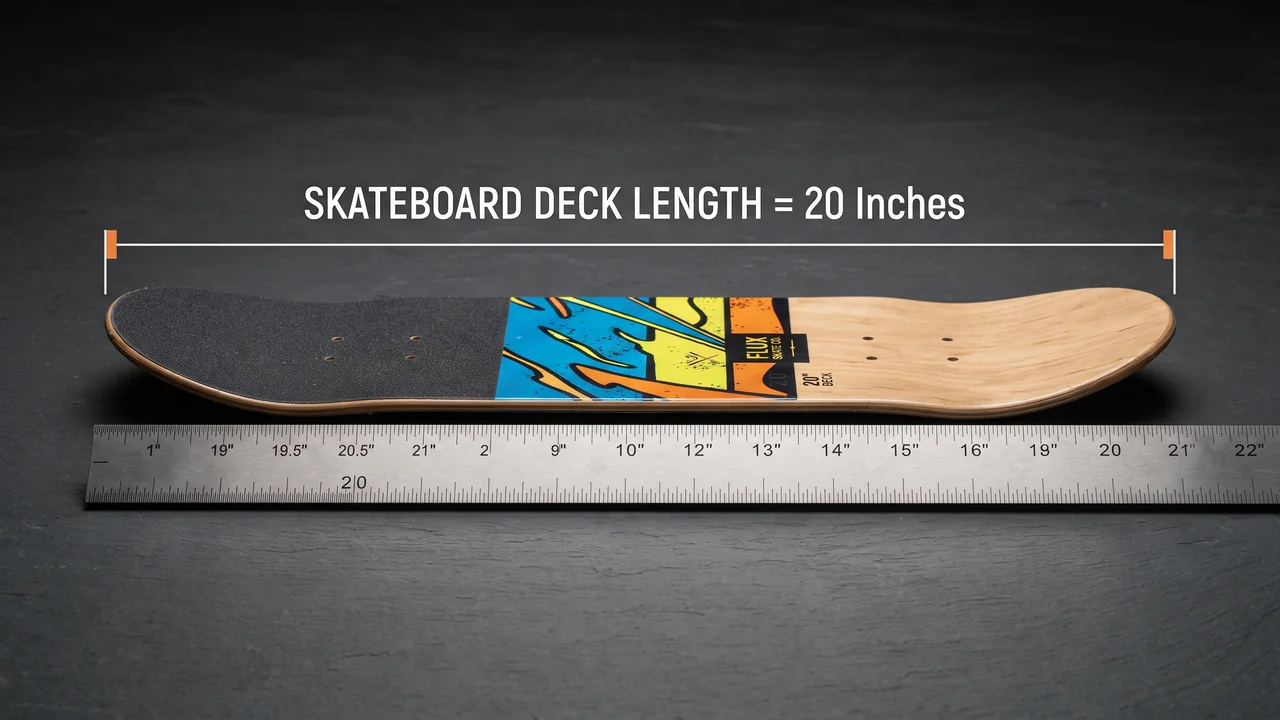
A mini-cruiser skateboard deck commonly uses a 20-inch industry size, although manufacturers set their own shapes. Measure along the deck’s longest centerline, excluding trucks and wheels. At exactly 20 inches, it matches Things That Are 20 Inches Long with zero-inch delta and 100% dimensional precision.
Hold the deck by its nose and tail, then compare it with a tape measure beside the centerline. The span feels like two full hand spans plus two fingers. Its curved edges can make it seem shorter, giving this 20-inch size comparison a useful tactile anchor.
Small Pet Crate Length
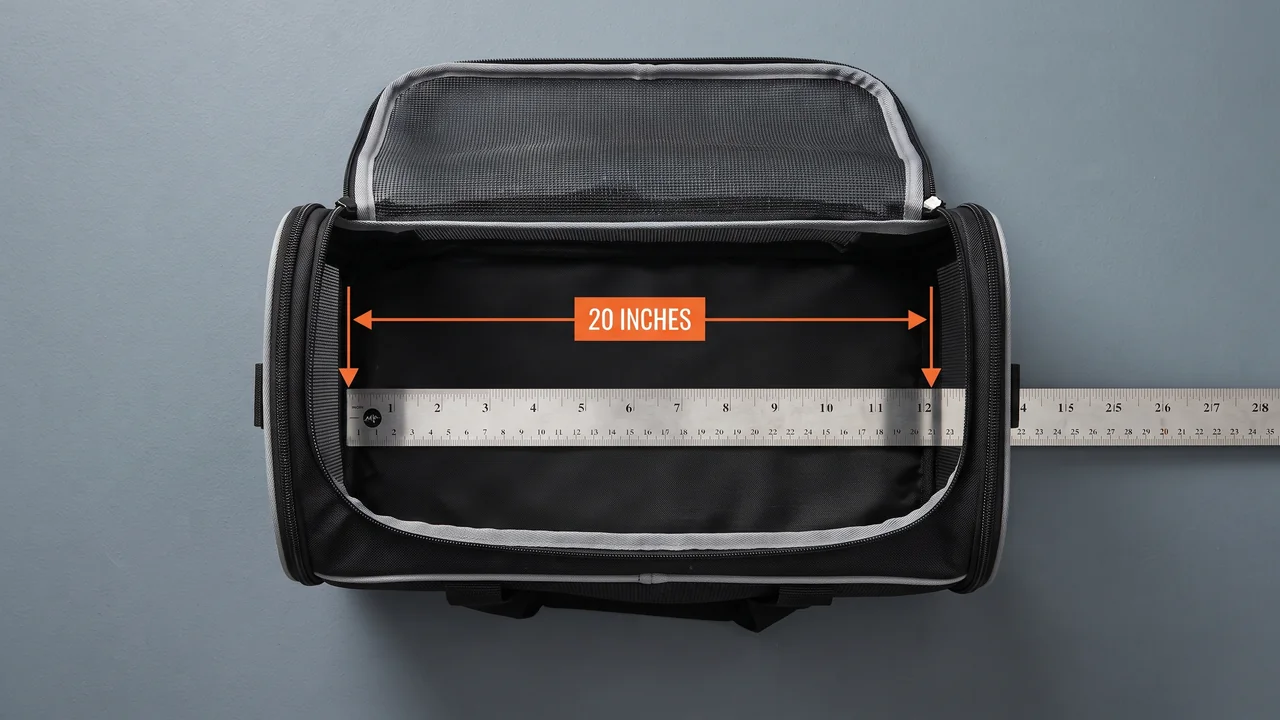
Small pet crates commonly use a 20-inch nominal length, though no single global standard controls them. Measure the inside floor along its longest horizontal edge, excluding the door frame. That equals 50.8 centimeters or 508 millimeters, with zero delta from the target when exact.
A true 20-inch crate reaches 100% dimensional accuracy against this reference. Slide your palm along the floor, then compare its length with a standard ruler. Holding the crate by both side handles gives a clear tactile sense of this compact travel size.
Foldable Umbrella Length
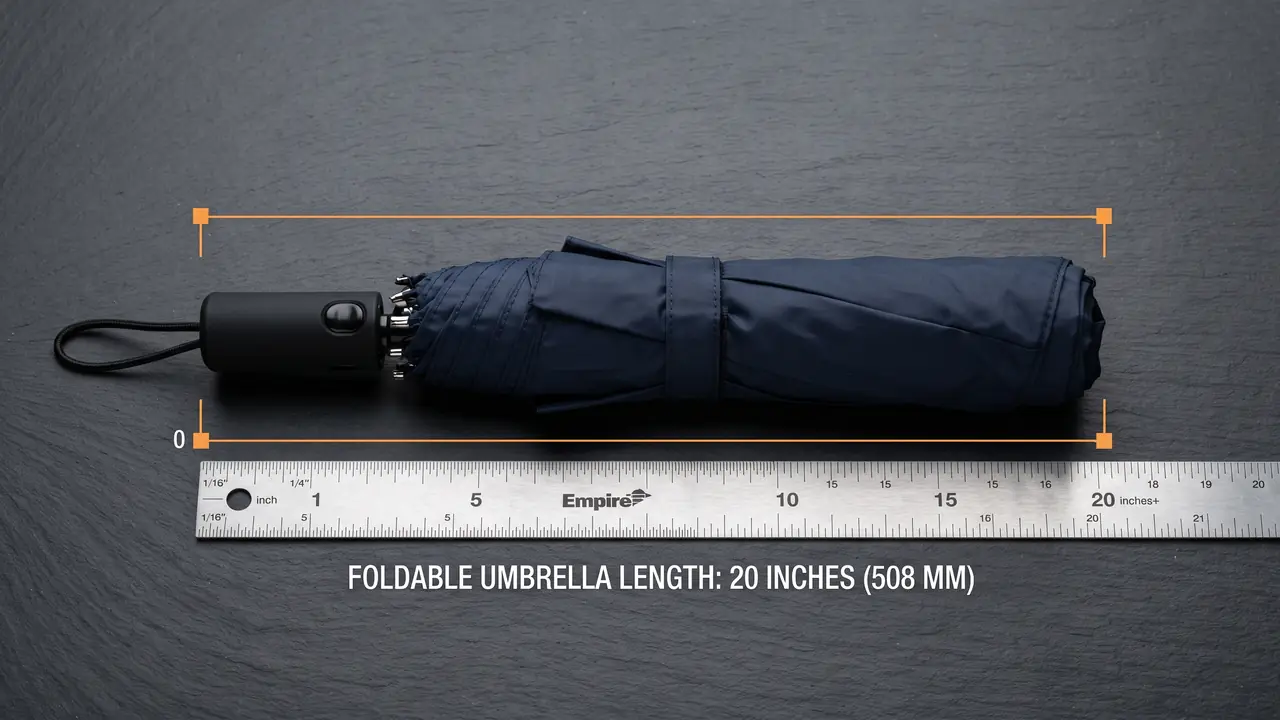
A full-size foldable umbrella often measures a nominal 20 inches when closed. No single global standard controls this length, so measure along the folded shaft from the handle base to the tip. At exactly 20 inches, it matches the target with a 0% difference.
This size gives a clear Things That Are 20 Inches Long visual comparison for travel gear. Hold the closed umbrella beside your forearm, then grip its handle and end cap to feel the complete span. Its narrow cylinder also fits many backpack side pockets and carry-on compartments.
Read Also: Who Is Jeremy Yaffe? Biography, Life Story, Family & Interesting Facts
Medium Wall Clock Diameter
A medium wall clock commonly uses a nominal 20-inch case diameter, though retailers may list slight variations. The measurement runs straight across the widest outer rim, not around the curved edge. At 20 inches, it equals 50.8 centimeters or 508 millimeters, matching the target exactly.
Holding the clock face against your torso gives a clear visual comparison for things that are 20 inches long. Your spread hand will cover less than half its width, while two 10-inch ruler lengths span the diameter. Pinching opposite rim points also creates an easy fingertip-to-fingertip check.
Ergonomic Reach and Handling
A 20-inch length works well for objects that need steady lifting, turning, or carrying. It stays shorter than many adult arm reaches, reducing awkward wrist positions. A person can usually support one end with each hand. This balance helps tools, cases, trays, and exercise equipment feel controlled during ordinary use.
Hand placement also affects how an object feels during use. An average adult palm measures about 3.5 to 4 inches across. Two palms placed end to end cover roughly 7 to 8 inches. Several hand placements therefore help estimate a 20-inch object without stretching the arms fully.
Packaging and Shipping Efficiency
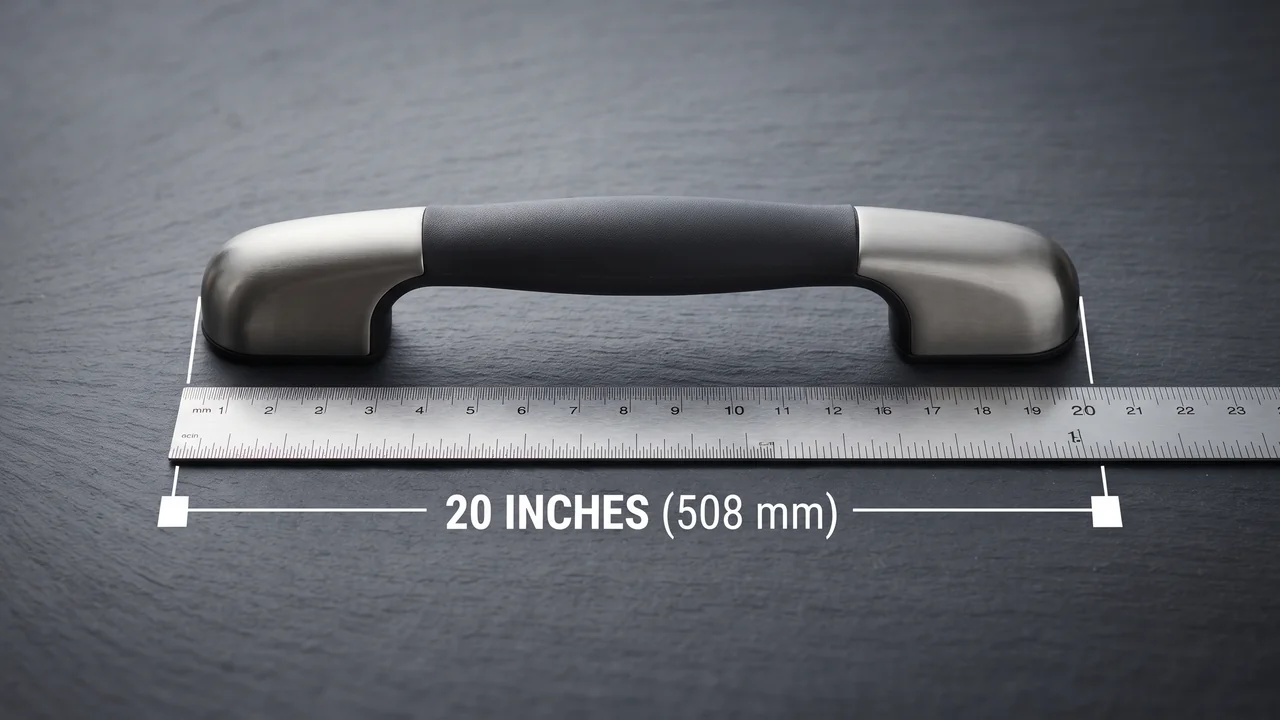
Manufacturers often use 20-inch lengths because they fit common cartons and shipping shelves. The size leaves room for padding without requiring an oversized package. It also supports simple rectangular shapes that stack efficiently. Packaging engineers check the product, protective material, label space, and closing flaps together.
Nominal carton sizes do not always show the usable interior space. Cardboard thickness reduces each inside measurement slightly. Cushioning can reduce it further around corners and edges. The National Institute of Standards and Technology explains measurement practices that help manufacturers compare stated dimensions consistently.
Storage and Furniture Compatibility
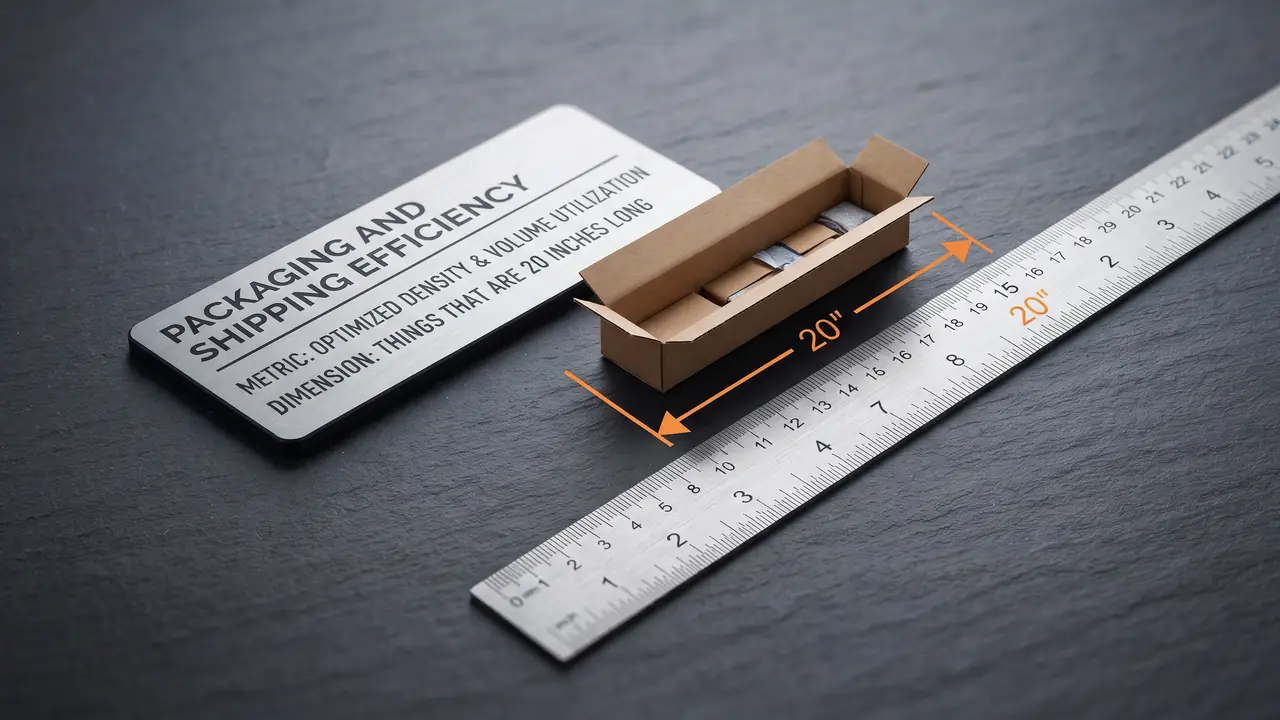
Twenty inches fits many shelves, drawers, cabinets, and desk zones. It offers useful capacity while leaving space for nearby objects. A box, pan, monitor stand, or storage bin can use this footprint effectively. Designers measure door openings, shelf depth, and clearance before selecting the final product size.
Furniture dimensions often use repeated modules rather than random measurements. A 20-inch item may fit beside a 30-inch cabinet or beneath a standard desk. Check the full outside length, including handles, hinges, wheels, and knobs. These parts can add several inches beyond the main body.

Nominal Dimensions Versus Actual Tolerances
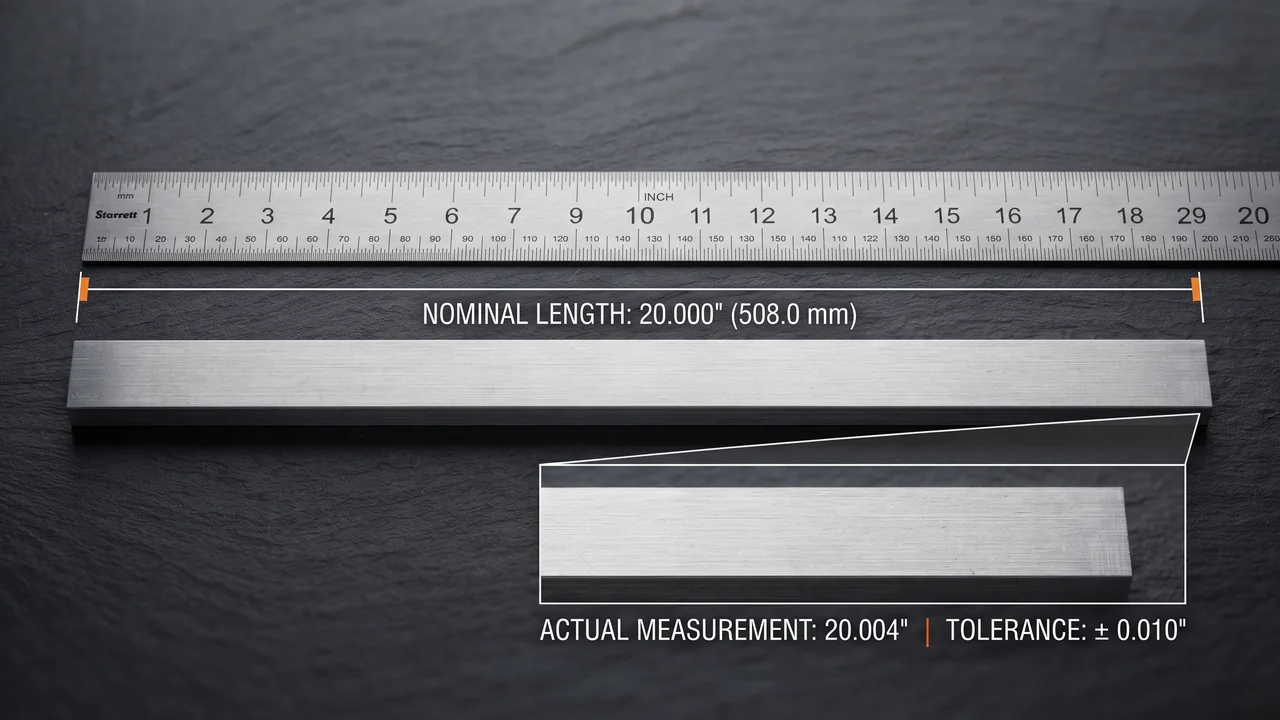
A stated 20-inch size usually describes a target, not an absolute physical limit. Manufacturing tolerances allow small differences during cutting, molding, sewing, or assembly. A product may measure 19.8 or 20.2 inches and still meet its design requirement. The allowed range depends on material, function, and production method.
ISO standards help manufacturers define repeatable dimensions, tolerances, and inspection methods. For example, ISO publishes international standards for measurement and manufacturing practice. Measure along the specified edge, not across a flexible cover or projecting handle. This approach prevents false comparisons between similar products.
How to Measure 20 Inches Without a Ruler or Scale
Estimating Things That Are 20 Inches Long works best with objects having known sizes. Twenty inches equals 50.8 centimeters, or 508 millimeters. That length is close to two standard rulers placed end to end. Use flat edges, mark each transfer point, and recheck your result before cutting or placing anything.
Use Two Rulers With a Controlled Overlap
Place two 12-inch rulers along one straight line. Overlap them by four inches, leaving exactly 20 inches exposed. Keep both rulers flat against the surface during measurement. Mark the first and final endpoints with pencil or removable tape. This method gives a strong household estimate when both rulers have clear inch markings.

Use Credit-Card-Width Tiles
A standard credit card measures 3.37 inches across its long edge. Six cards placed side by side measure 20.22 inches, only 0.22 inches longer. That creates a 98.9% size match. Align each card carefully, then mark the first and last edges. This works well on desks, shelves, and other flat surfaces.
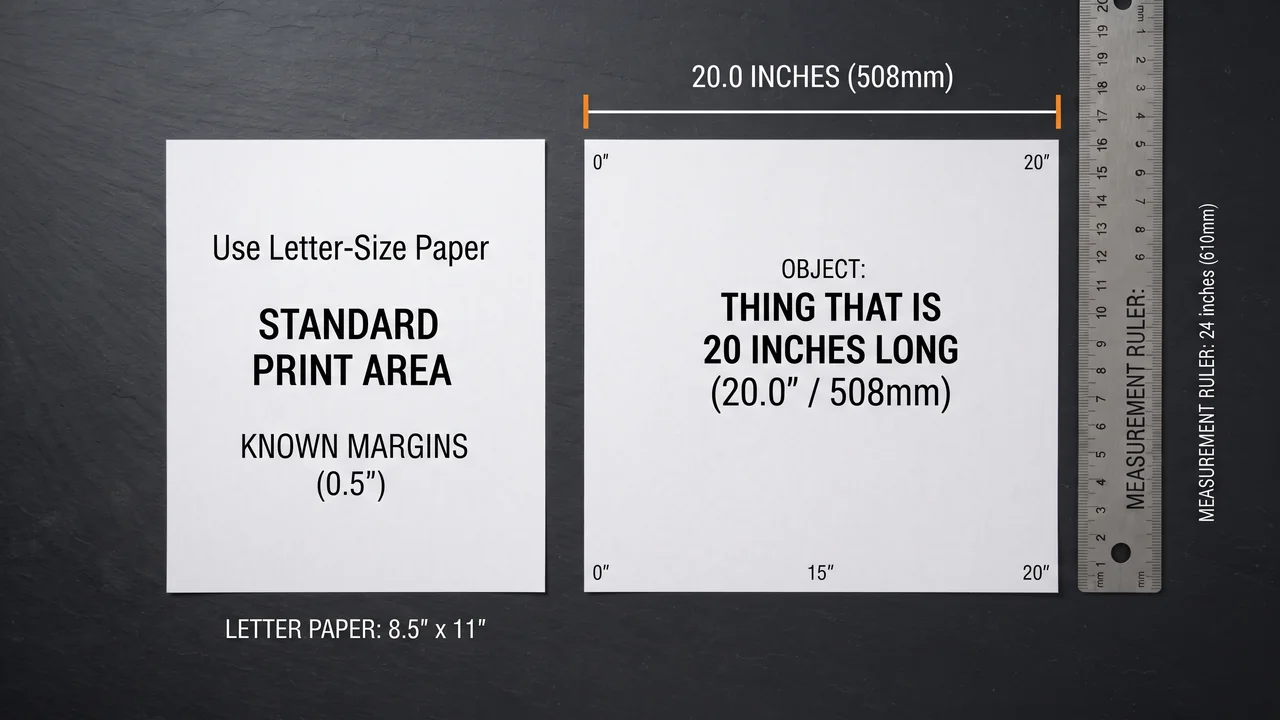
Use Letter-Size Paper and Known Margins
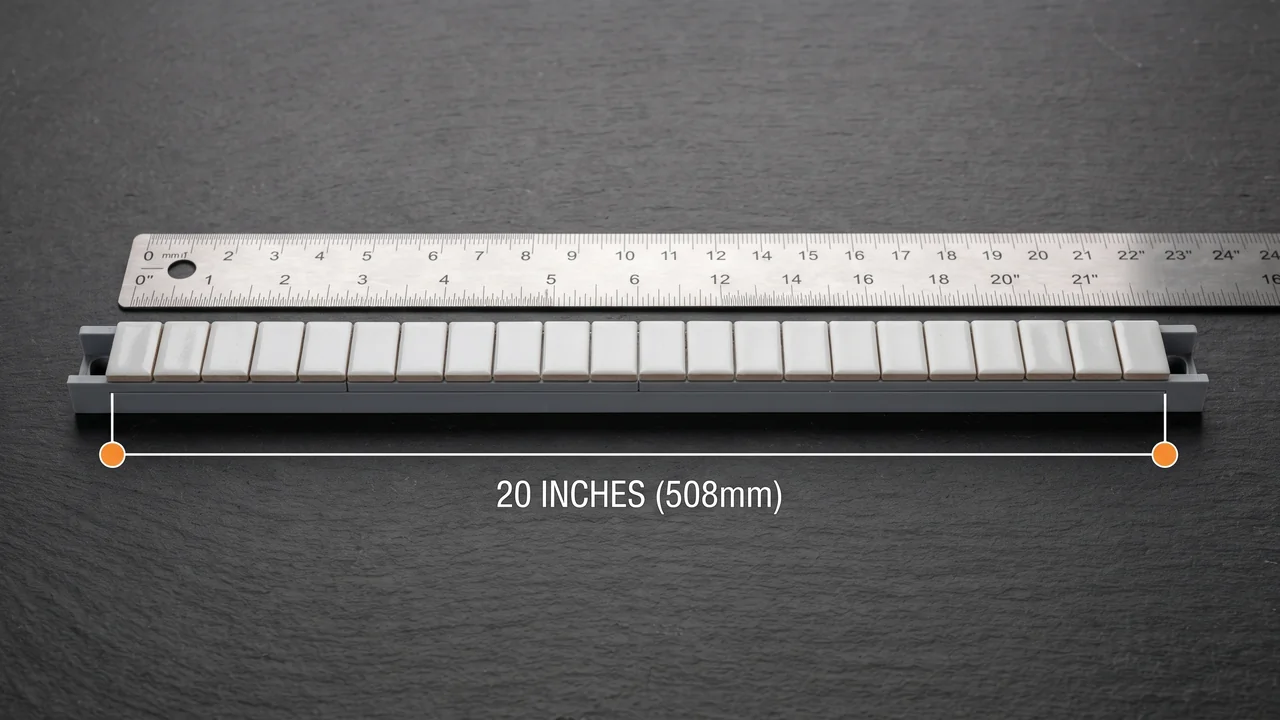
Letter paper measures 11 inches along its longest edge. Place two sheets end to end, then overlap their edges by two inches. The remaining length equals 20 inches. Keep the sheets square, because angled paper creates a longer diagonal reading. A pen line across the overlap makes this setup easier to repeat.
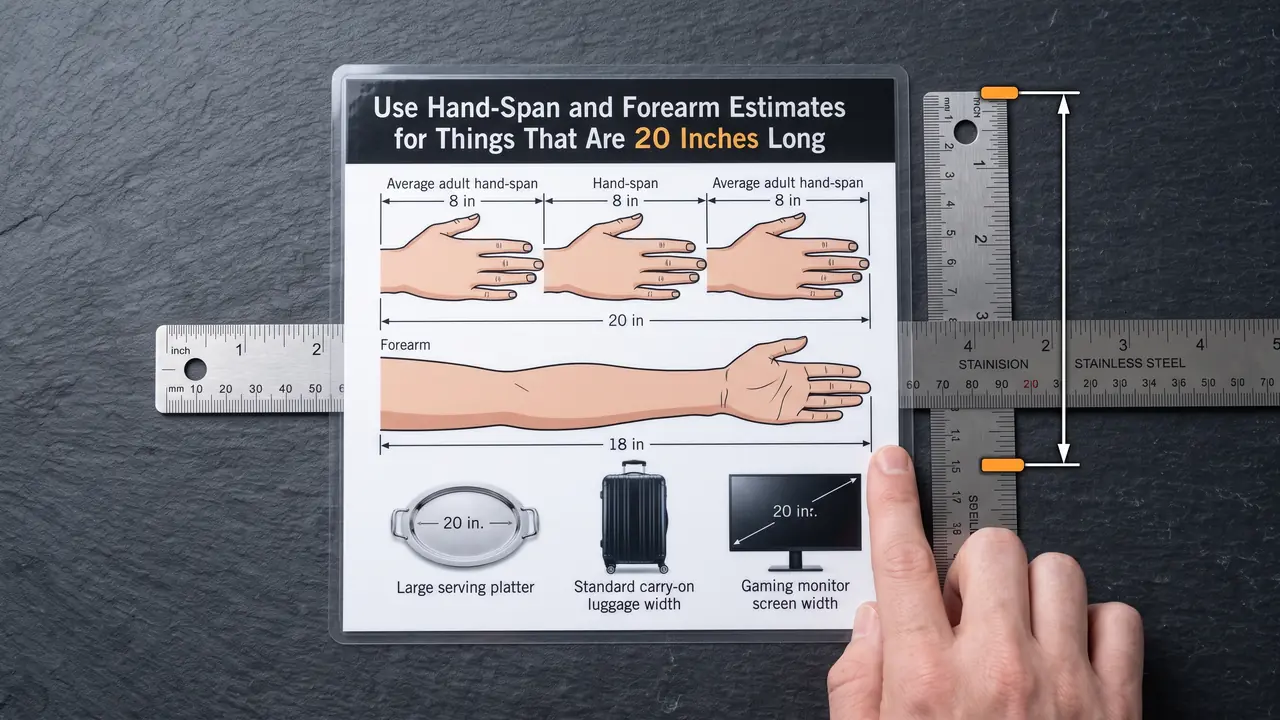
Use Hand-Span and Forearm Estimates
Most adult hand spans measure about seven to nine inches. Two full spans usually cover 14 to 18 inches, leaving a small gap. Add one index-finger knuckle, near one inch, for a closer estimate. Your wrist-to-elbow forearm length may also approach 20 inches. Check your personal span against a known object first.
Mark, Transfer, and Recheck the Distance
Stretch string or painter’s tape between the two endpoints. Mark both points before moving the material to another surface. Compare that marked length with rulers, paper, or six credit cards. Recheck from the same edge, not from a rounded corner. This transfer method prevents gaps, overlaps, and curved-line errors.

Frequently Asked Questions
How long is 20 inches?
Twenty inches measures exactly 50.8 centimeters. It also equals 508 millimeters or 1.6667 feet. For a quick visual comparison, imagine two standard sheets of letter paper placed end to end, with a small overlap. That combined length closely represents Things That Are 20 Inches Long in everyday spaces.
What household items are about 20 inches long?
Several common household items approach 20 inches. A medium keyboard, compact shelf, laptop sleeve, baking tray, or small wall frame may measure near this length. Always check the longest edge, because handles, bezels, rims, and raised parts can change the total measurement.
How many feet are in 20 inches?
Twenty inches equals 1 foot and 8 inches. As a decimal, the measurement is 1.6667 feet. Divide inches by 12 for the conversion: 20 ÷ 12 = 1.6667. This makes a two-foot reference slightly too long by four inches.
How many millimeters are in 20 inches?
Twenty inches equals exactly 508 millimeters. Multiply the inch value by 25.4, the defined millimeter conversion: 20 × 25.4 = 508. This metric value helps when checking product plans, cut lists, fabric layouts, and storage openings marked in millimeters.
Can I estimate 20 inches without a measuring tape?
Yes, you can estimate 20 inches with known objects. Place three credit cards across the distance, allowing small overlaps, then compare the result. A credit card measures about 3.37 inches long. Five cards placed end to end reach roughly 16.85 inches, so add about three inches.
What is a good visual comparison for 20 inches?
A two-foot ruler with four inches removed shows 20 inches. You can also picture a standard keyboard placed beside a short ruler extension. For a body estimate, two full hand spans may approach the target, though hand sizes vary widely. Use these comparisons for planning, not precision cutting.
Conclusion
The distance is 20 inches, equal to 50.8 centimeters, 508 millimeters, or 1.6667 feet. Things That Are 20 Inches Long span just over four standard five-inch segments. That scale feels close to a small desktop keyboard’s width or a folded towel’s long edge. Check the measured end points, because curves, handles, and rounded corners can change an estimate.
Use the One Anchor Rule: a credit card in your pocket measures 3.37 inches long. Place six cards end to end for a rough 20.22-inch visual guide, then remove the small excess. This makes Things That Are 20 Inches Long easier to picture during shopping, packing, or furniture checks. For better accuracy, use a tape measure and keep it straight along the full length.
