

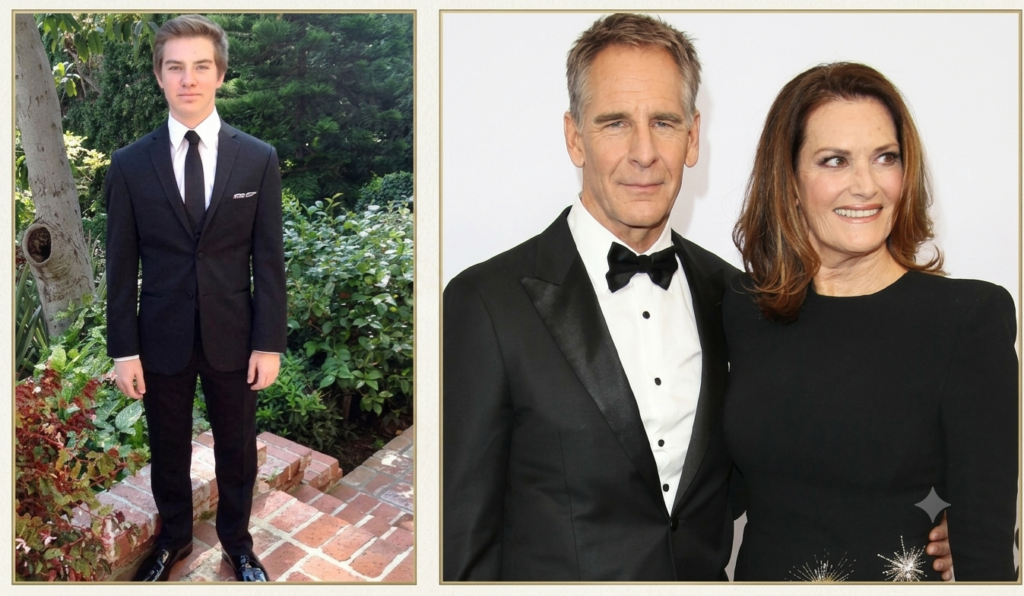
Not every child of a Hollywood legend wants the spotlight. Some of them want something quieter — something real. Wil Bakula is exactly that kind of person. Born to Golden Globe-winning actor Scott Bakula and accomplished actress Chelsea Field, he grew up inside one of America’s most creative households and made a choice that surprised almost everyone: he picked music over movies, Oregon over Hollywood, and authenticity over easy fame. At 29 years old, Wil has built a genuinely independent artistic identity that owes nothing to his father’s iconic roles and everything to his own patient, disciplined creative work. That’s not a small achievement. That’s a life built on purpose.
Wil Bakula Quick Bio
| Detail | Information |
| Full Name | Wil Bakula |
| Date of Birth | December 1995 |
| Age (2025) | 29 years old |
| Birthplace | United States |
| Nationality | American |
| Father | Scott Bakula |
| Mother | Chelsea Field |
| Sister | Chelsy Bakula (b. 1984) |
| Brother (Adopted) | Cody Bakula (b. 1991) |
| Younger Brother | Owen Bakula (b. 1999) |
| High School | Loyola High School, Los Angeles |
| University | Willamette University, Salem, Oregon |
| Profession | Musician, Keyboardist, Music Video Director |
| Band | Chromatic Colors |
| Other Project | Foamboy (synth-pop duo) |
| Height | 5 feet 8 inches (173 cm) |
| Hair / Eyes | Light brown / Light brown |
| Social Media | Minimal — very limited public presence |
Early Life and Childhood
Creativity wasn’t something Wil Bakula discovered. It was the air he breathed from day one. Growing up as the son of two working Hollywood professionals means your childhood doesn’t look like other people’s childhoods. Rehearsal schedules, script readings, production timelines — those aren’t abstract concepts you learn about in school. They’re things you observe across the dinner table, absorb through conversation, and internalize before you even have language for what you’re watching. For Wil, that early exposure to disciplined artistic work planted a seed that eventually grew into something entirely his own.
His parents — Scott Bakula and Chelsea Field — made a deliberate choice not to push their children toward any specific path. The household emphasized humility, curiosity, and hard work above everything else. Fame was the context, not the goal. That distinction matters enormously when you’re raising children who could easily mistake visibility for value. Wil didn’t make that mistake. He grew up understanding that the real work happens before the applause, not because of it.
What drew him specifically to music rather than acting isn’t something he’s documented extensively in public statements. But the pattern is clear enough from the outside. He gravitated toward keyboards early, began experimenting with sound and composition during his teenage years, and never looked back toward the camera. Some people find their instrument and it just fits — the relationship between musician and keyboard is physical, intuitive, and deeply personal in a way that acting, with all its external collaboration and public performance, isn’t quite the same. Wil found his instrument. Everything else followed from that.
His childhood was also notably shielded from unnecessary public attention. Scott and Chelsea kept their children’s lives private in a way that many celebrity parents don’t bother with, and that protection gave Wil the space to develop without the distorting pressure of being watched. He got to be a kid first. An artist came later, organically, on his own timeline.
How Old is Wil Bakula?
Wil Bakula was born in December 1995, making him 29 years old as of 2025.
Twenty-nine is a genuinely interesting age for an independent musician. You’re past the early experimentation phase where everything is potential and nothing is proven. You’ve built enough to know what you’re actually capable of and enough to see what you still want to create. The best work of most serious musicians arrives in their thirties — which means Wil, right now, is standing at the edge of his most productive creative decade.
He isn’t rushing it. That patience — the willingness to develop slowly and deliberately rather than chase momentum — is one of the most consistent traits in everything known about his approach to both music and life.
Who is Wil Bakula’s Father?
Scott Bakula is one of those actors who managed something rare: he built genuine cultural affection across multiple generations with completely different roles.
Born on October 9, 1954, in St. Louis, Missouri, Scott came up through musical theater before television found him. His role as Dr. Sam Beckett in Quantum Leap — the time-traveling physicist who leaps into strangers’ bodies to right historical wrongs — made him a household name in the late 1980s and early 1990s. The show ran for five seasons and earned Scott a Golden Globe Award along with multiple Emmy nominations. It’s the kind of role that could have trapped a lesser actor inside one identity forever. Instead, he kept moving.
Captain Jonathan Archer in Star Trek: Enterprise introduced him to an entirely different fanbase. The role demanded a different register — steadier, more authoritative, less emotionally volatile than Sam Beckett — and Scott delivered it with the same commitment he brought to everything. Then came Special Agent Dwayne Pride in NCIS: New Orleans, which gave him a decade of critically respected work in a procedural format that reaches audiences who never watched science fiction.
Three distinct iconic roles. Three different eras. One consistent professional reputation for reliability, intelligence, and genuine craft.
For Wil, watching that career unfold from the inside provided something no film school can teach: the understanding that longevity in creative work comes from discipline, versatility, and the refusal to let success calcify into formula. Scott Bakula kept reinventing himself professionally while staying consistent personally. That’s a masterclass in creative life, delivered daily by his father just by showing up and doing the work.
The musical theater background is the piece most biographical summaries underweight. Scott Bakula didn’t come to acting from a purely cinematic tradition. He trained in a discipline where performance, music, movement, and storytelling all coexist simultaneously. That multi-dimensional artistic foundation almost certainly influenced Wil’s own preference for work that synthesizes multiple creative elements — keyboard performance, songwriting, and visual direction all at once.
Who is Wil Bakula’s Mother?
Chelsea Field is the parent whose career trajectory most directly mirrors the creative path Wil eventually chose — not in medium, but in method.
Born on May 27, 1957, in Glendale, California, Chelsea began as a dancer before transitioning into acting. That starting point matters. Dance requires the internalization of discipline in a way that acting training alone doesn’t always demand — you’re working with your body as the instrument, developing precision through repetition, learning to communicate emotion through physical movement rather than words. That training shapes how you approach every creative challenge afterward.
Her film work includes memorable performances in Masters of the Universe and The Last Boy Scout alongside Bruce Willis. Her television career brought her to NCIS: New Orleans, where she notably shared scenes with her husband Scott Bakula — one of the more unusual professional collaborations a Hollywood couple has managed. Acting opposite your spouse, in an established procedural drama, in front of a national audience, requires a particular kind of professional confidence and relational security. Chelsea handled it with characteristic composure.
As a mother, her influence on Wil appears to operate primarily through example rather than instruction. She didn’t lecture him about the value of creative work — she demonstrated it through decades of consistent, quality-focused performance. She didn’t pressure him toward a specific career — she modeled what it looks like to pursue your genuine artistic interests with dedication and professionalism. Wil absorbed those lessons not from conversations but from observation, which is how the deepest lessons usually travel between parents and children.
Her encouragement of his musical direction — actively supporting rather than merely tolerating his departure from the family’s acting tradition — reflects a mother who genuinely wants her child to find his own real thing rather than a convenient version of hers.
Sister – Chelsy Bakula
Chelsy Bakula, born in 1984, is the eldest of the Bakula children — and the sibling who most thoroughly embodies the family’s capacity for choosing private meaning over public recognition.
She has kept her personal life almost entirely away from media attention, focusing on her own interests and family connections rather than building any kind of public career. In a household that produced two well-known parents and a younger brother with genuine artistic visibility, Chelsy’s choice to live privately is itself worth noting. She didn’t leverage the Bakula name for social currency or career advantage. She just lived her life on her own terms, away from cameras.
That pattern — famous family, deliberately private life — repeats itself across the Bakula siblings in different ways. Chelsy was the first to establish it, which means she may have also been the one who made it feel like a genuinely available option for Wil and the others. When the eldest child demonstrates that privacy is possible and worthwhile, it gives permission to the younger ones to make similar choices. Chelsy may be the least publicly discussed Bakula sibling, but her influence on the family’s overall orientation toward private life shouldn’t be underestimated.
Brother – Cody Bakula
Cody Bakula is perhaps the most surprising member of the Bakula family — and the most eloquent argument that genuine parenting means releasing children toward their own authentic paths, however unexpected.
Born in 1991 and adopted into the Bakula family, Cody grew up in the same creatively saturated household as his siblings and emerged from it as a gemologist and goldsmith. Not an actor. Not a musician. Someone who works with precious stones and metals, crafting objects of beauty and value through precision, patience, and deep technical knowledge.
That choice, coming from within a Hollywood family, reads initially as a departure. Look closer and it’s actually a perfect expression of the same values. Gemology rewards an eye for quality, the patience to study deeply, and the discipline to develop a craft over years rather than seeking immediate recognition. Goldsmithing is a physical creative practice that produces objects of lasting value rather than ephemeral performances. The creative intelligence is the same as what drives acting or music — it’s just expressed through an entirely different medium.
Cody lives in Los Angeles and maintains the same low-profile approach that characterizes most of his family. He has dedicated himself to his craft without seeking public validation for it. In a family of artists, he’s simply a different kind of artist. That quiet confidence in his own direction is the most Bakula thing about him.
Brother – Owen Bakula
Owen Bakula, born in 1999, is the youngest sibling and the one whose public life most directly intersects with his parents’ entertainment world — though he’s brought his own unmistakable dimension to it.
His artistic passions span ballet, acting, singing, and modeling — a range that reflects both his mother’s dancer origins and his father’s musical theater background, synthesized into a genuinely contemporary artistic identity. His ballet work, including performances with the Columbia City Ballet, demonstrates a level of physical discipline and technical dedication that goes well beyond casual artistic interest.
Owen is also a visible advocate for gender non-conformity, using his platform in the performing arts to promote inclusivity and broader representations of identity. That advocacy work extends his artistic presence beyond performance into cultural conversation — a move that reflects both personal authenticity and genuine social engagement.
Among the four Bakula siblings, Owen carries the family’s performance tradition most visibly forward while making it distinctly his own. He’s not replicating what his parents built. He’s building something adjacent to it that belongs entirely to his generation and his specific artistic sensibility. That distinction — honoring a legacy without being defined by it — is something the entire Bakula family seems to have figured out independently.
Educational Journey
Wil’s educational choices weren’t accidental. They were a deliberate strategy for creating the conditions that serious artistic development requires.
Loyola High School in Los Angeles gave him his formal foundation. Known for rigorous academics and strong arts programming, Loyola isn’t the kind of school where you coast on your parents’ reputation. It demands genuine effort and rewards genuine engagement. Wil developed his keyboard interest seriously during these years — not as a hobby alongside his real work, but as the beginning of a real work in itself.
The move to Willamette University in Salem, Oregon was the more consequential decision. Salem is roughly a thousand miles from Los Angeles and a world away from Hollywood’s ambient noise. Nobody at Willamette was particularly interested in the fact that his father played Sam Beckett. He was a music student, evaluated on his musical ability, surrounded by other serious young musicians with no particular interest in celebrity proximity.
That environment — anonymous, academically serious, geographically removed from entertainment industry gravity — gave Wil exactly what he needed. Space to fail privately. Space to experiment without the results being interpreted as commentary on his family. Space to develop a genuine artistic voice rather than a performed version of someone else’s.
His studies focused on composition, performance, and music production. The combination built the technical foundation for everything he’s done since — the keyboard work, the songwriting contributions, and the production sensibility that shows up in his music video direction. Education, for Wil, wasn’t a credential or a delay. It was the actual work of becoming the artist he intended to be.
Why He Chose Music Over Acting
The answer is simpler than most analyses suggest, and more interesting for being simple.
Acting would have made Wil famous-adjacent almost immediately. Put the Bakula name on a casting breakdown in Hollywood and people take notice. That access — the ability to move into rooms that take other actors years to reach — was genuinely available to him. He didn’t use it.
Music offered something acting couldn’t: a field where the comparison to his father doesn’t work. Nobody listens to a synth-pop keyboard player and compares the performance to Sam Beckett. The reference points are entirely different. The evaluative frameworks are entirely different. In music, Wil could be heard on his own terms without the constant shadow of an iconic television career hanging over every professional moment.
There’s also the instrument question. The keyboard is a profoundly personal instrument — it can replicate an orchestra or whisper like a single voice, it rewards both technical precision and improvisational feeling, and the relationship between a keyboardist and their instrument develops over years into something that feels like genuine communication. Wil found that relationship early and it became the organizing principle of his creative life.
Acting is collaborative by nature — directors, scene partners, writers, producers all shape the final product. Music, particularly the kind Wil makes, can be more deeply personal. The creative control is greater. The relationship between the internal emotional life and the external artistic product is more direct. For someone with Wil’s temperament — introspective, independent, precise — that directness is the whole point.
He didn’t reject his parents’ world. He chose a different creative form within it. The discipline is the same. The commitment is the same. The tools are just different.
Music Career
Wil’s music career has the shape of someone building something genuinely sustainable rather than chasing a moment.
His first significant professional context was Chromatic Colors, an Oregon-based indie band where he served as keyboardist, contributing both to performance and to the band’s songwriting process. The group’s sound blended alternative and electronic influences into something atmospheric and emotionally textured — the kind of music that rewards repeated listening rather than demanding immediate reaction.
His contributions went beyond playing. He co-directed the band’s music video for the track Expectations, stepping into the visual storytelling dimension of the band’s output with the same seriousness he brought to the music itself. The decision to direct — rather than simply perform — signals a creative intelligence that thinks about audience experience holistically, not just sonically.
The album Nature/Nurture, produced during his time with Chromatic Colors, carries themes that resonate personally. Identity. Emotional growth. The tension between what we’re given and what we build. Those aren’t random thematic choices. They’re the preoccupations of someone actively working through what it means to inherit a famous name while building an independent life.
Foamboy, the synth-pop duo he developed alongside his Chromatic Colors work, represents a different dimension of his creative output. The debut album My Sober Daydream pushed further into electronic territory, exploring introspective themes with a production sophistication that reflected the composition skills he’d been developing since university. The title itself — My Sober Daydream — suggests the kind of quiet, wakeful imagination that characterizes genuinely original creative minds.
His music is currently available through streaming platforms. The audience is modest by commercial standards and exactly the right size for the kind of serious, emotionally focused work he creates. Independent musicians who prioritize creative integrity over chart performance don’t need millions of listeners. They need the right listeners — people who engage deeply rather than superficially. Wil appears to have found his.
Personality, Lifestyle & Public Image
The picture that emerges from everything known about Wil Bakula is strikingly consistent: calm, independent, thoughtful, and genuinely uninterested in performing a public version of himself for anyone’s benefit.
He isn’t shy in the way that word usually implies social discomfort. He’s private in the more precise sense — someone who has assessed what he wants to share with the world and made deliberate choices about what remains personal. That’s not the same thing as introversion, and it’s not the same thing as avoidance. It’s clarity about the difference between the work and the persona, and a preference for letting the work carry the weight.
His decision to turn down brand deals in order to keep his music free from commercial compromise is the clearest window into his values. In the current economy of independent music, brand partnerships are one of the primary ways artists supplement streaming revenue. Declining them costs real money. Wil has apparently decided that creative purity is worth that financial trade-off — which is exactly the kind of values statement that’s easy to claim and difficult to actually live. He’s living it.
The minimal social media presence tells a similar story. Not the cultivated absence that functions as its own kind of attention-seeking, but genuine disengagement from platforms that reward constant self-presentation. He has accounts but doesn’t maintain them actively. The music exists where it exists. People who find it, find it. People who don’t, don’t. That’s not resignation — it’s confidence in the work itself.
Personal Life
Wil keeps his personal relationships completely private, and that boundary deserves full respect.
What’s observable is the family closeness that multiple sources confirm. He maintains warm relationships with his parents and siblings — the kind of family dynamic that produces adults who are secure enough in their personal foundation to take genuine creative risks. You don’t build the kind of independent artistic identity Wil has built without a reliable emotional base underneath you. His family provides that.
The romantic dimension of his life is simply not public. No confirmed relationships, no social media hints, no celebrity event appearances with partners. That absence of information isn’t unusual for someone with his overall orientation toward privacy — it’s entirely consistent with it.
At 29, he’s at an age where personal life and professional development are usually deeply intertwined. Whatever his personal circumstances, they seem to support rather than distract from his creative work, which continues to develop steadily and on his own terms.
Appearance & Physical Details
Wil Bakula stands at approximately 5 feet 8 inches tall, weighing around 154 pounds. He has light brown hair and light brown eyes — an appearance that reads as warm and approachable rather than dramatically styled for public effect.
There’s no cultivated artistic persona in the visual sense. No distinctive look engineered to signal his creative identity from across a room. He looks like what he is: a thoughtful young man who puts his energy into the music rather than the image around it. In a media landscape that often rewards stylized self-presentation as heavily as actual creative output, that plainness is quietly radical.
His physical appearance reflects his father’s build more than his mother’s, though the warmth in his features has been noted by those who’ve observed both parents’ public personas. He’s recognizable as a Bakula without being a replica of either parent — which is, again, entirely consistent with everything else known about how he’s navigated his identity.
Net Worth and Financial Standing
Transparency about what’s actually knowable here matters more than speculation about specific numbers.
Wil Bakula’s personal net worth is not publicly disclosed. He earns through music production, streaming revenue, live performances, and creative direction work. Independent musicians operating in the indie and electronic space don’t generate commercial-scale revenues unless their work crosses into mainstream exposure — and Wil has deliberately avoided the kinds of compromises that tend to produce that crossover.
His father Scott Bakula’s net worth is estimated between $10 million and $16 million across various sources — the accumulated value of a decades-long career spanning Quantum Leap, Star Trek: Enterprise, NCIS: New Orleans, and substantial theatrical work. That family financial stability exists in the background of Wil’s life without appearing to drive his professional decisions.
What’s clear from his choices — declining brand deals, investing earnings back into music equipment, choosing creative quality over commercial scale — is that financial maximization isn’t his primary objective. He appears to be building a sustainable creative life rather than an accumulating financial one. Those are different projects and they require different decisions. Wil seems entirely clear about which project he’s working on.
Future Prospects
Everything about Wil’s trajectory suggests someone who will continue building steadily rather than seeking a dramatic breakthrough moment.
The music video directing work he’s already done creates a natural expansion pathway. Direction is a craft that develops over time through practice and accumulating judgment — exactly the kind of skill development that suits Wil’s patient, deliberate approach. As his visual storytelling skills deepen alongside his musical production abilities, the range of creative work available to him broadens considerably.
The synth-pop and indie electronic space he inhabits with Foamboy is also moving in a direction that favors what he does. Audiences are increasingly drawn to music that prioritizes emotional authenticity over production spectacle — introspective, carefully crafted, built for sustained attention rather than immediate impact. Wil has been making exactly that kind of music for years already. The cultural moment is catching up to where his artistic instincts have always been.
At 29, with a Willamette music education, genuine band experience, music video directing credits, and two distinct musical projects under his belt, Wil Bakula has more foundation than most independent artists ever build. The next decade will almost certainly produce his most significant work — not because of any external pressure, but because that’s simply how creative development works when someone is doing it right.
Conclusion
The Bakula name could have been the whole story. It wasn’t. Wil Bakula took one of the most recognizable surnames in American television, moved a thousand miles from Hollywood, sat down at a keyboard, and built something that belongs entirely to him. No acting roles. No celebrity gossip. No cultivated public persona. Just music — carefully made, thoughtfully released, and offered to whoever finds their way to it.
That kind of creative independence is harder to achieve than it looks, especially from inside a famous family. The gravitational pull toward the familiar, the available, the already-proven is enormous. Wil felt that pull and chose a different direction anyway — not out of rebellion, but out of genuine self-knowledge. At 29, he’s still building. The interesting thing about that isn’t the uncertainty. It’s the quality of what he’s already built — and the unmistakable sense that the best chapters haven’t been written yet.
FAQs
Who is Wil Bakula?
Wil Bakula is an American musician and the eldest son of actors Scott Bakula and Chelsea Field. He plays keyboard and directs music videos, known primarily for his work with the Oregon-based indie band Chromatic Colors and the synth-pop duo Foamboy.
How old is Wil Bakula?
He was born in December 1995, making him 29 years old as of 2025.
Who are Wil Bakula’s parents?
His father is Scott Bakula, the Golden Globe-winning actor known for Quantum Leap, Star Trek: Enterprise, and NCIS: New Orleans. His mother is Chelsea Field, an actress known for The Last Boy Scout and Masters of the Universe.
Why did Wil Bakula choose music over acting?
He wanted to build a creative identity entirely his own, separate from his parents’ acting legacy. Music offered a field where he could be evaluated on his own terms without constant comparison to his father’s iconic television roles.
What band is Wil Bakula in?
He is best known for his work with Chromatic Colors, an Oregon-based indie band, and Foamboy, a synth-pop duo. Albums include Nature/Nurture with Chromatic Colors and My Sober Daydream with Foamboy.
Does Wil Bakula have siblings?
Yes. His older sister is Chelsy Bakula (b. 1984). His adopted older brother is Cody Bakula (b. 1991), a gemologist and goldsmith. His younger brother is Owen Bakula (b. 1999), a ballet dancer, actor, and advocate for gender non-conformity.
What is Wil Bakula’s net worth?
His personal net worth is not publicly disclosed. He earns through music production, streaming, and creative direction work. His father Scott Bakula’s net worth is estimated between $10 million and $16 million.
Does Wil Bakula have social media?
He maintains a minimal online presence with limited activity, reflecting his consistent preference for privacy and his belief that the work should speak for itself.
